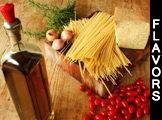
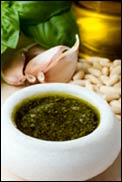
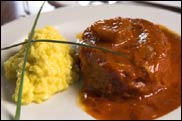
Italian cuisine is characterized by strong regional influences which differ from region to region.
These differences are based on a combination of climatic factors (availability of specific ingredients), historic factors (migration flows, influence from other peoples) and geographical factors (living by the seaside or in the mountains).
While many countries have different culinary styles according to the region, in Italy these differences are much more pronounced. This is not surprising considering the shape of the country - long and narrow, surrounded by the sea and with big mountains in the North - and the fact that Italy became a unified nation only in 1868, after having mainly been a confederation of states for the previous thousand of years.
If we look at Italy's different culinary styles we could say that the main differences lay in the source of carbohydrates, the origin of the proteins and the choice of vegetables.
In the North carbohydrates come in the form of rise (the typical risotto comes from the Padana plane where large rise fields can be found around the Po river), polenta and potatoes. In the South the main source of carbohydrates are the traditional pasta and pizza. In the center carbohydrates come mainly in the form of pasta. Grains like orzo (barley) and farro (spelt) are eaten in various regions of Italy.
The cuisine form Northern Italy is mainly based on meat (usually red) with 'heavy' Winter vegetables, such as carrots, rapes, cauliflower.
The cuisine from the South (except the islands Sicily and Sardinia) is based on fish and lambs with lighter vegetables (salads, tomatoes). Sicilian and Sardinian cuisine are mainly based on fish and seafood.
In central Italy, we find the Roman cuisine, which includes traditional meat dishes, and the Umbrian and Tuscan cuisine, which are based on game and red meat. The cuisine of Emilia-Romagna includes very sophisticated preparations showing a strong French influence, but also enjoying the richness of that area throughout the centuries.
In the islands, Sicilian cuisine was influenced by the long lasting domination of the Arabs and the Spaniards, and is quite refined with an impressive tradition in terms of pastry.
Sardinian cuisine is very much "stand alone" with dishes mainly based on seafood, fish, as well as locally grown pork and lamb. It consists of simple preparations, but all extremely "tasty".
.
.
.
YourGuidetoItaly.com 2005-2009 © All Rights Reserved.
Photos of the YourGuidetoItaly.com banner (from left to right): (on campus) Sean Locke, (red deckchair) Valentina Jori, (chianti botlle) Donald Gruener, (Vitruvian man) Jodie Coston, (coliseum), Roberto A Sanchez, (Fiat 500) Luca di Filippo. Photo of 'Rialto bridge' by S. Greg Panosian.