Oilve Oil
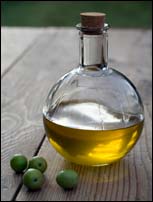
Olive oil is not just used as a vector to distribute heat during the cooking process, but also forms an integral part of the recipe's ingredients. It is therefore always choosen with the utmost care. Only the best quality extra-virgin olive oil is used in Italian cuisine. The olive oil used for cold prepartions such as marinades and salades, or savoured with bread, is of a different quality as the one used for cooking.
Extra-Virgin olive oil
Extra-virgin oil comes from the first pressing of the olives and contains no more than 0.8% acidity. It is judged superior in taste and with more health-beneficial properties.
In Italy quality labels exist for olive oil in the same way as for quality wine. Olive oils grown in the specific regions are given the Denominazione di Origine Protetta (Denomination of Protected Origin) status.
Olive oil from the Chianti region has the special quality assurance label of Denominazione di Origine Controllata (Denomination of Controlled Origin; DOC) as well as the DOP. "First cold press" means that no heat was used in the production process, which is important because heat alters the olive oil's chemistry and qualities.
.
.
.