
Italian cuisine is strongly influenced by local history and traditions, as well as by the local and seasonal availability of products. Each region of Italy has its own regional food specialties. These regional differences are based on a combination of climatic factors (availability of specific ingredients), historic factors (migration flows, influence from other peoples), geographical factors (living by the seaside or in the mountains) and economic factors (gastronomy influenced by the presence of former noble courts, labor or peasant communities). Some of Italy’s most famous gourmet foods, which have gained international fame, such as white truffles, can actually be found only in specific areas of Italy.
While many countries have local culinary styles that differ from region to region, in Italy these differences are much more pronounced. This is not surprising considering the shape of the country – long and narrow, surrounded by the sea and with big mountains in the North. Add to that the fact that Italy became a unified nation only in 1861, after having mainly been a confederation of states for the previous thousand of years, and this diversity becomes even more obvious.
This be said, the Italian menu is typically structured in much the same way all over Italy, with an antipasto, primo, secondo and dessert. Typical Italian foods and dishes include assorted appetizers (antipasti misti), all types of pasta, risotto and pizza, soups (minestroni and zuppe) and delicious meat and fish dishes.The main regional differences are in the sources of carbohydrates, the origin of the proteins and the choice of vegetables or contorni (side dishes).
To simplify grossly, we could say that in the North carbohydrates come mainly in the form of rice (the typical risotto comes from the Padana plane where large rise fields can be found around the Po river), polenta and potatoes, while in the South the main source of carbohydrates are the traditional pasta and pizza. Polenta is also a common dish in center-south regions, like Molise, though. Grains like orzo (barley) and farro (spelt) are eaten in various regions of Italy. Then there is also the focaccia, with several versions according to the region.
More about Italian cuisine.
So, even the most popular Italian foods are not necessarily common all over Italy. Below we have compiled a list of famous Italian foods, iconic Italian dishes, renowned traditional, regional foods of Italy, Italian staple foods and must-eat dishes when you are in Italy. Note that there is a great difference between dishes that are generally considered as “typically Italian” abroad, but that may not be so widespread in Italy, and dishes that are popular in various regions of Italy, but relatively unknown abroad.
Pasta
Pasta can be subdivided according composition (only wheat flour and water, or wheat flour, water and eggs), shelf-life (fresh or dry pasta), production method and shape or cut.
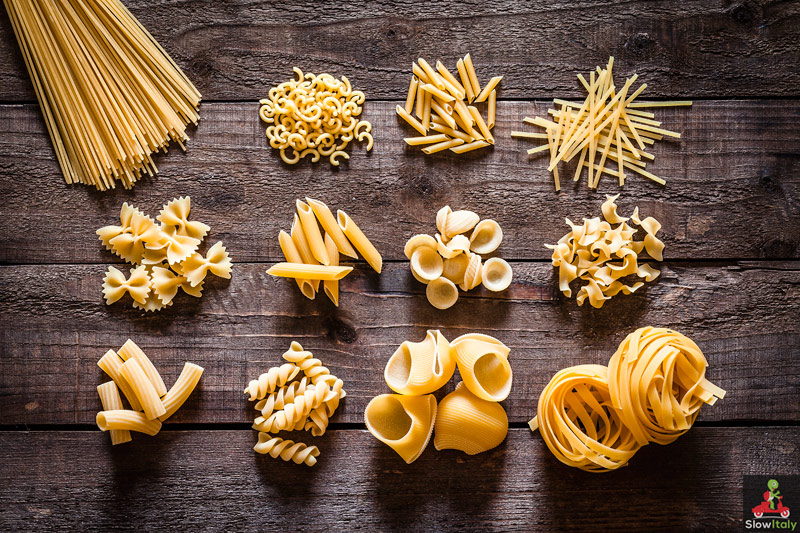
Many shapes are available, but Italians usually group the different shapes into short and long pasta, and plain or stuffed pasta. Each shape of pasta is matched with a different sauce depending on that shape’s ability to hold that specific sauce. Moreover, some pasta types are found only in a particular region or change name according to the region.
Pasta is usually made from durum wheat semolina flour and water, with or without eggs. Pasta with eggs should contain at least five entire eggs for each kilogram of semolina. Only natural ingredients such as tomatoes, basil, spinach, truffles or cuttlefish ink may be added to color or flavor the dry pasta. However, recently pasta made from ancient grain varieties, such as spelt, or even broad beans, are becoming increasingly popular.
See: types of pasta and 10 most famous pasta dishes of Italy.
Pizza
Pizza is an oven-baked, flat, usually round-shaped bread covered with ingredients such as tomato sauce, cheese, olive oil and optionally other toppings.
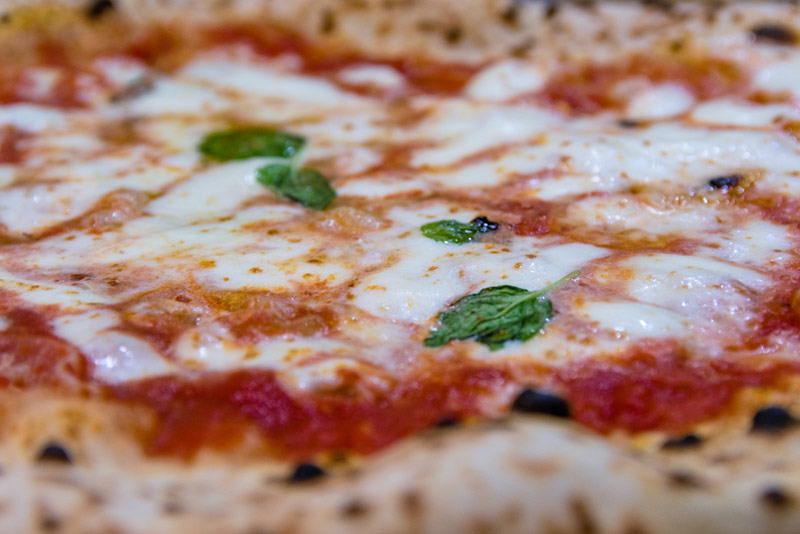
There are, broadly speaking, two types of pizza: the Neapolitan one, which is relatively tick on the outside perimeter and resembles a flat bread, and the Roman one, which is much thinner and crustier. Neither of the two resembles the type of pizza found in the US.
Italians also distinguish between red (with tomato sauce) and white pizza (also called focaccia, which has no tomato sauce, but can be topped with other ingredients). More about Italian pizza.
Lasagne
Lasagne is an oven-baked pasta dish consisting of layers of sheet-shaped pasta alternated with a choice of the following ingredients and sauces: cheese and/or bechamel sauce, tomato sauce, various meats (usually ground beef or pork, or a combination of the two), vegetables (zucchini, spinach). The “white” version of lasagne is prepared without tomato sauce, while in the vegetarian one the meat is usually replaced with zucchini or spinach. Lasagne is typically a home-made dish with infinite variations according to the region and local tradition.
Risotto
Risotto is a rice dish typically served as a primo (except in Milan where it is traditionally also served as a side dish with ossobucco, for example) and which can be flavored in a hundred different ways.
The rice is first coated and toasted in butter, then cooked in broth to a creamy consistency. The broth may be meat-based or fish-based depending on what kind of ingredients the risotto will be flavored with. Nearly all risotto recipes include parmesan cheese (except those with seafood), butter (never cream!), and onion. Some of the most famous risotto recipes are alla Romana and alla Milanese (with saffron).
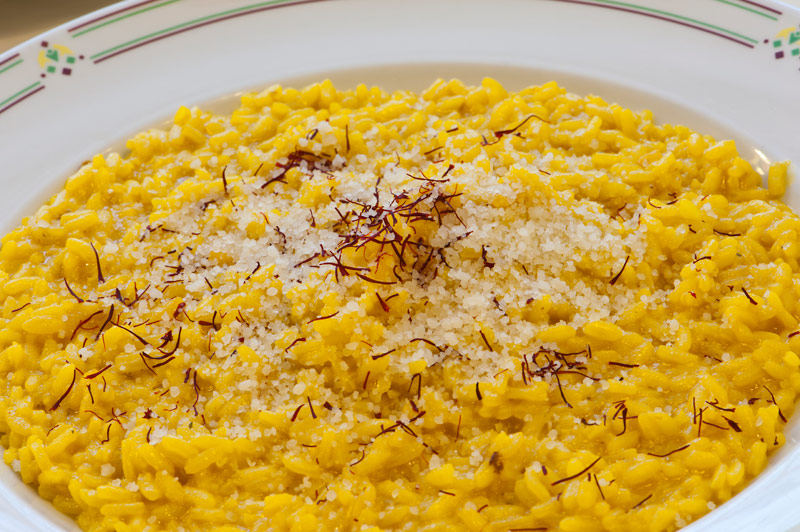
Other typical risotti include: risotto ai funghi, risotto al tartufo bianco (or with white truffle), risotto ai frutti di mare (with seafood), risotto alla milanese (with saffron).
Polenta
A dish of boiled cornmeal that may be served as mashed potatoes, or in solid loafs that can be baked, fried or grilled. Originally, before the introduction of maize in Europe, polenta was not yellowish but darker as it was not made with maize, but with spelt (farro), rye or buckwheat.
A classic dish of the Roman cuisine is Polenta con spuntature e salsiccia (polenta with tomato sauce, sausage and pork spareribs)
Focaccia
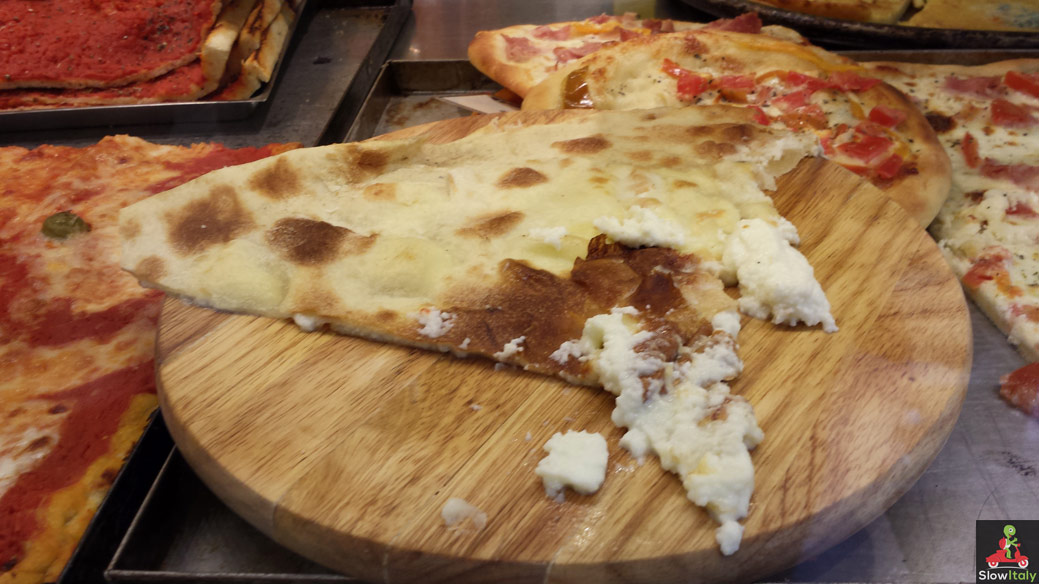
Focaccia is a kind of flat bread made in the much the same way as pizza, seasoned with olive oil, herbs, vegetables and/or cheese. It is typical of Liguria, Piedmont, Sicily, Veneto, Marche and Umbria (where it is called crescia), Tuscany (schiacciata) and Basilicata (strazzata).
One of the most famous ones is the focaccia named after the town of Recco, which is very thin and topped with stracchino cheese.
Crochette, Arancini and Supplì
Arancini are an originally Sicilian fried specialty usually made of minced meat, fish, potatoes or rice, mixed in egg yolk, breaded and fried in oil or butter pan. They are typically cylindrical, but in some parts of Sicily they can be spherical,
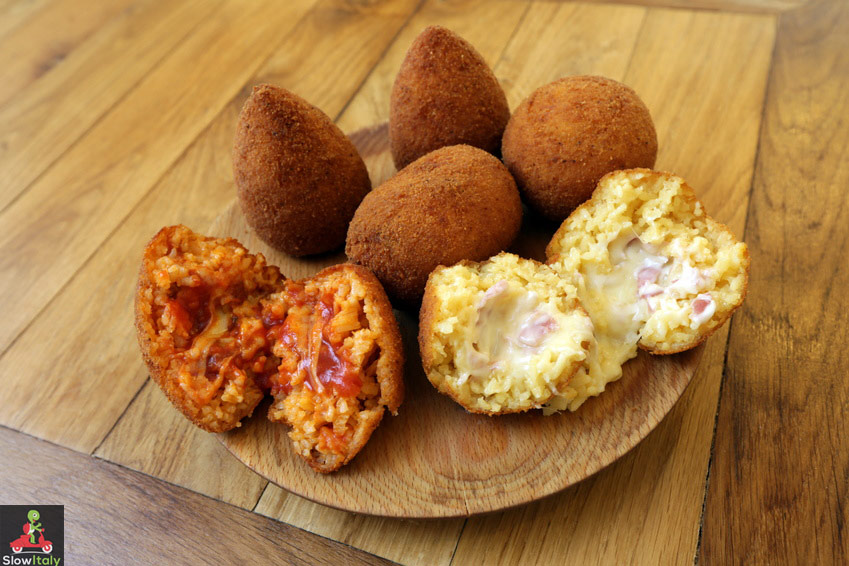
While the arancino is traditionally a Sicilian specialty, there is also a neapolitan variant, locally known as e pall ‘e riso, prepared with typical neapolitan ingredients, resulting in a less dry and more tomato flavored arancino.
Particularly common in Italian cuisine are rice arancini, supplì with rice and milanese rice croquettes and potato croquettes, the latter being quite different and more tasty than the potato croquettes served as a side dish in other countries.
Polpette
Polpette can be made of meat, fish, potatoes, rice or vegetables and can be prepared stewed, baked or fried.
Grissini
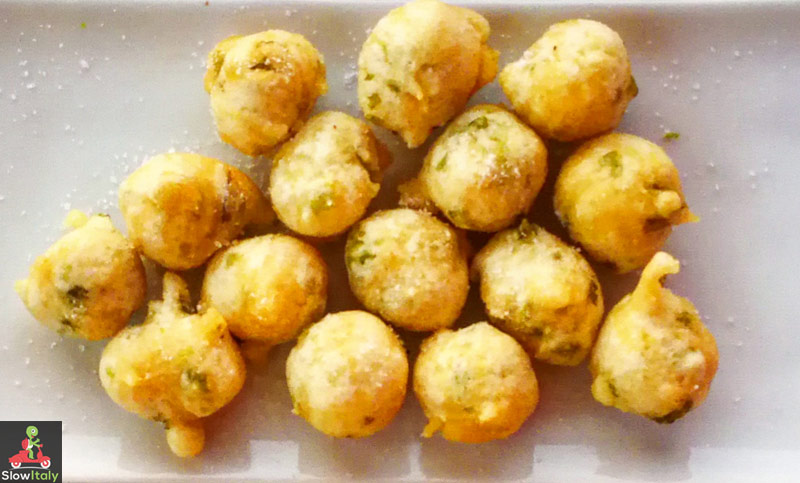
Grissini are the long, thin, crisp, breadsticks, usually brought with the bread basket in Italian restaurants. They can be flavored with various sesame seeds, herbs and spices. They originated in Piedmont, but are now common everywhere in Italy and even abroad.
Quality-wise they can vary from the pre-made and -packed standardized breadsticks to home-made as a signature pre-meal snack.
Bruschetta
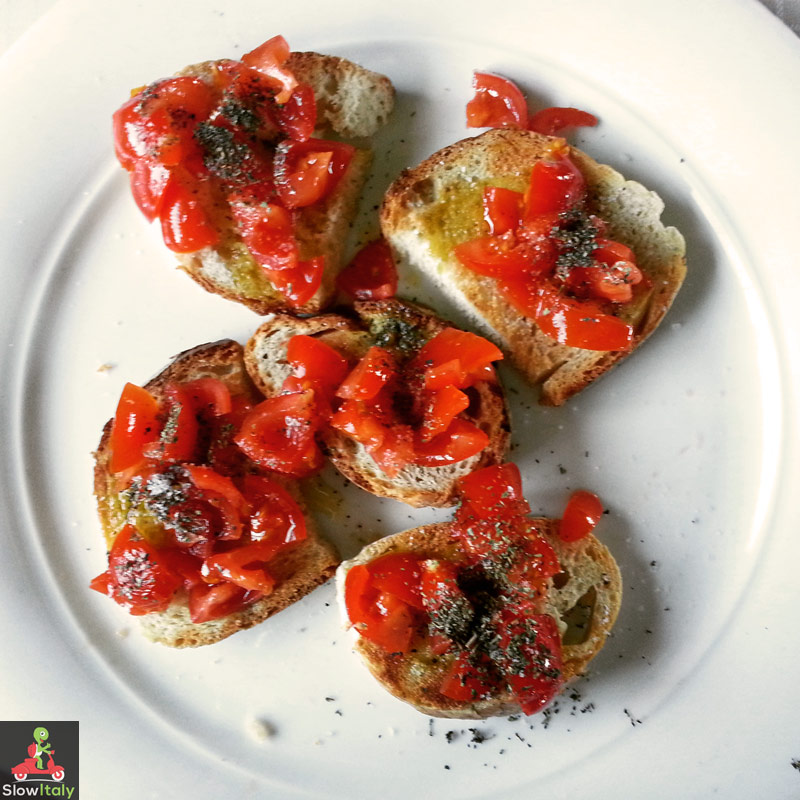
A classic Italian appetizer or pre-appetizer, usually seasoned with olive oil and garlic and or olive oil and freshly cut tomatoes.
Mozzarella
Traditionally, Mozzarella referred to a raw, spun cheese obtained through a specific production method (pasta filata method) during which the cheese paste is spun (stretching and kneading it to obtain the right consistency), after which it is cut off to the desired size (mozzare). The finest mozzarella is obtained from buffalo milk (mozzarella di bufala).
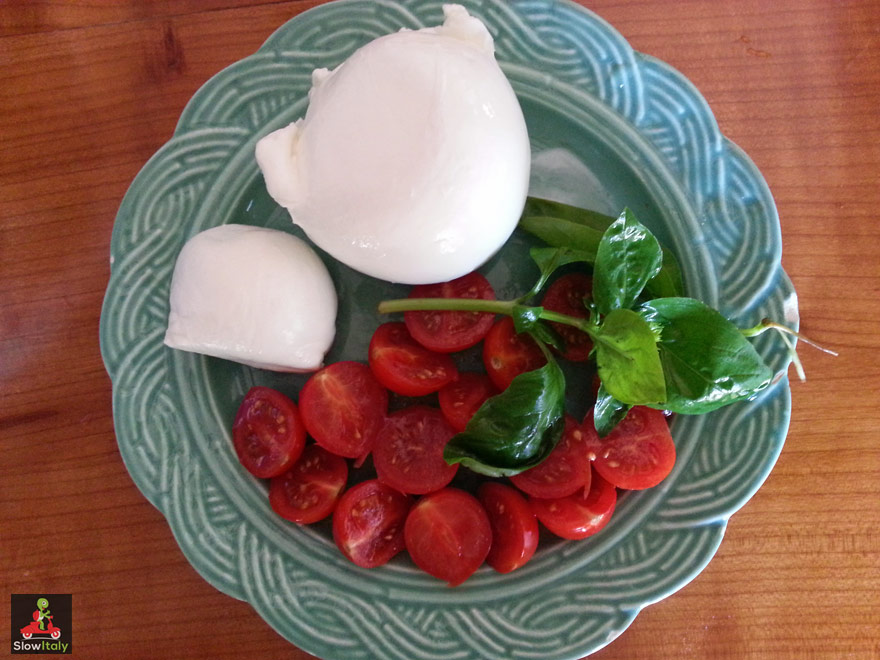
Today Mozzarella is sold in different types (fresh, smoked, leaf-wrapped, stuffed or seasoned) and in different shapes and qualities (in descending order: mozzarella di bufala Campana, mozzarella di bufala, mozzarella tradizionale, mozzarella fior di latte).
The best mozzarella is still found south of Naples near Battipaglia and Caserta where it is made of raw milk following the traditional recipe. Unfortunately, this type of mozzarella has a very short conservation time and will rarely be found outside its original region.
Note that genuine, fresh (non-industrial), mozzarella should NEVER be stored in the fridge. Of course, this goes for mozzarella bought in Italy. If it needs to be stored in the fridge it means that it has been processed or treated in some way that is not conform to the way it is done for authentic mozzarella. True mozzarella is stored in a dry and cool place, within its siero (liquid in which it is stored) and should be consumed within 5 days of production (which is approximately 24h after you buy it, to stay on the safe side). Keeping it in the fridge renders it more spongy and less ‘milky’. See also: Mozzarella, sfogliatella, tazzulella.
Parmigiano
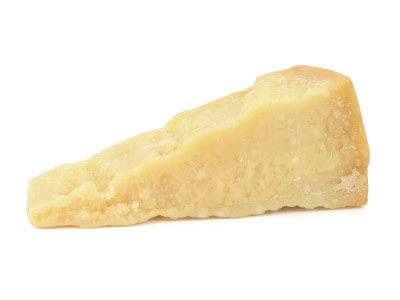
In Italy (and the rest of Europe) the name Parmigiano is a protected designation of origin for the hard, granular cheese from Parma. The generic name for this type of cheese from other parts of Italy is grana.
Antipasti
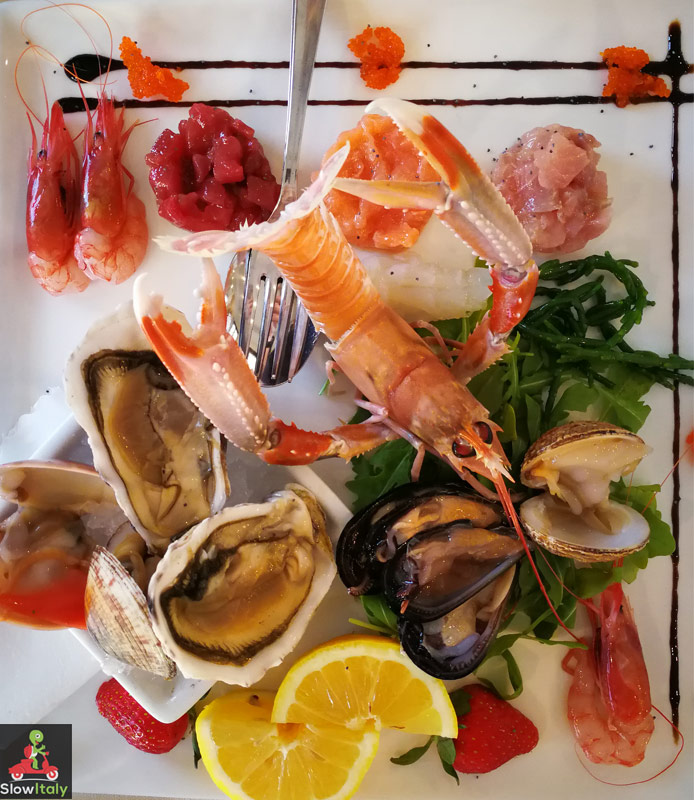
Typical antipasti misti include salumi (cold meats), vegetali (vegetables) and formaggi (cheeses) and crudité (raw fish) or misto crudo. Note that the French word crudités, originally means “raw vegetables, usually served as an appetizer or side dish”. In Italian, however, the word exclusively refers to a raw fish appetizer.
Minestrone (vegetable and beans soup)
A variety of thick soups made with vegetables, beans and pasta, rice or potatoes. Common ingredients include onions, celery, carrots, kale or cabbage and stock. It is served as a primo as an alternative to a pasta or risotto dish.
Porchetta
A very savory, boneless pork roast, aromatized with rosemary or fennel, and with a deliciously crispy skin crust, common in Umbria, Lazio, Abruzzo, Tuscany, Marche, Emilia-Romagna, Basilicata, Molise and Veneto.
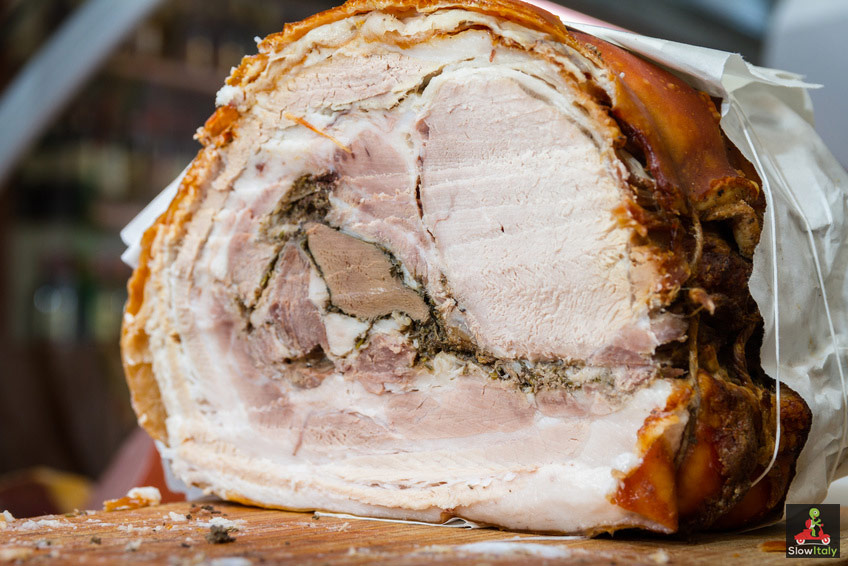
Porchetta has gained the label of a prodotto agroalimentare tradizionale (“traditional agricultural-alimentary product”, one of a list of traditional Italian foods held to have cultural relevance).” It is probably one of the few dishes that is excellent both cold or hot and that is commonly consumed both as as street food (stand-alone or in a panino), or as a meat dish.
Carpaccio
Carpaccio originated in Venice, presumably in Harry’s bar, where it was first served in 1950. The dish consists of thin slices of raw beeft sprinkled with oil and thin slices of Parmesan cheese. It can be served on a bed of rocket leaves.
Fritto misto
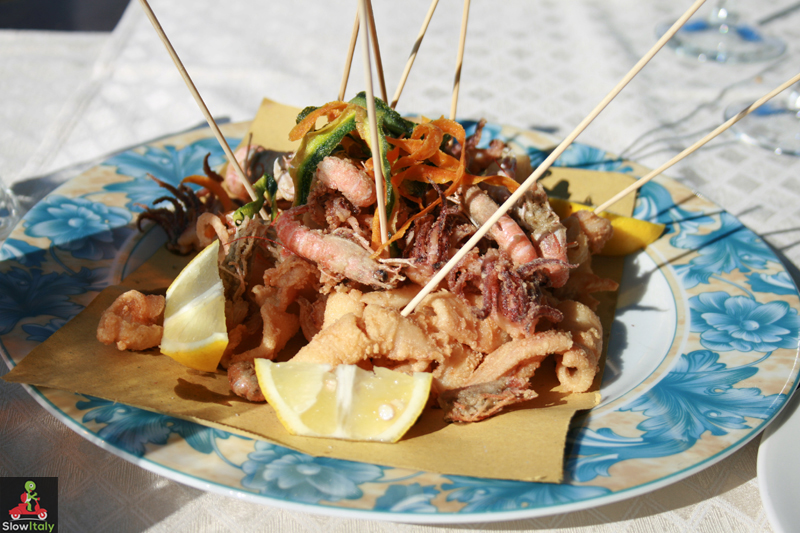
A typical Italian dish that will differ from region to region and may consist of fried vegetables, small fried fish or fried meat.
In Rome the fritto misto will generally be an assortment of fried vegetables served as antipasto. In seaside areas it will be fritto misto di pesce, also called frittura di paranza. In Milan there is the fritto misto alla milanese, an assortment of fried pieces of veal offal, while in Piedmont the fritto misto alla piemontese could easily stand for a whole meal in its own right.
Saltimbocca
Saltimbocca alla Romana, as the name indicates, is a typical Roman dish that has become popular around the world.
It is a type of open involtino (roulade) consisting of veal stuffed with prosciutto and sage, sauteed in butter with a bit of white wine. The mixture of butter and wine in which the saltimbocca is being cooked later serves as sauce for the dish.
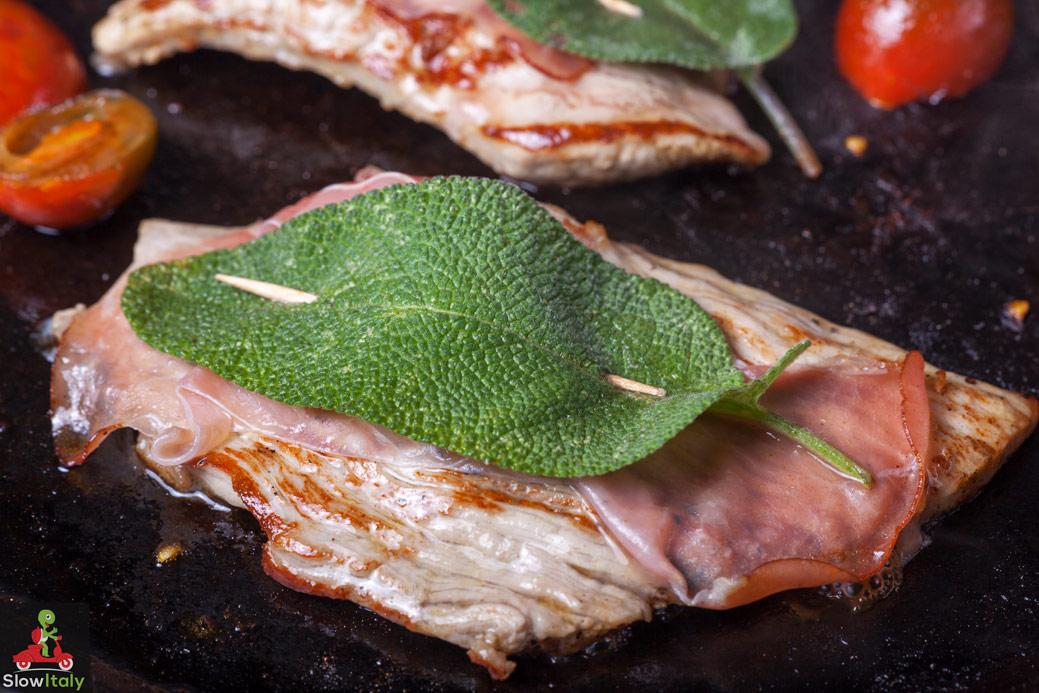
In the original Roman recipe the “wrap” is left open, but wrapped versions also exist.
Brasato
Brasato is a type of pot roast in which meat (rarely fish) is braised very slowly at medium temperature in a small amount of simmering liquid, usually either wine, beer or broth, and spices. When the brasato is cooked in an alcohol base the meat is previously marinated in that liquid together with the typical soffritto base (onion, carrots and celery) for several hours. When the meat is ready the liquid is filtered or whisked, and reduced if necessary, and used to top the sliced brasato.
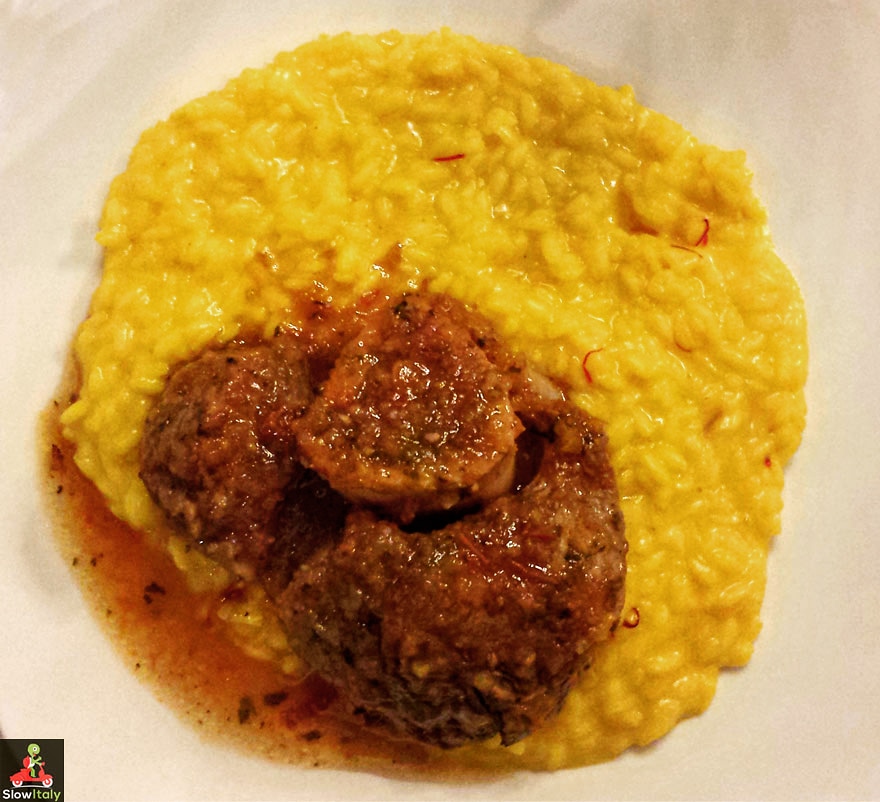
Ossobuco
Shin of veal with marrow bone in a tomato and wine sauce. Can be served as a second dish but is often served together with the risotto alla Milanese (with zafran).
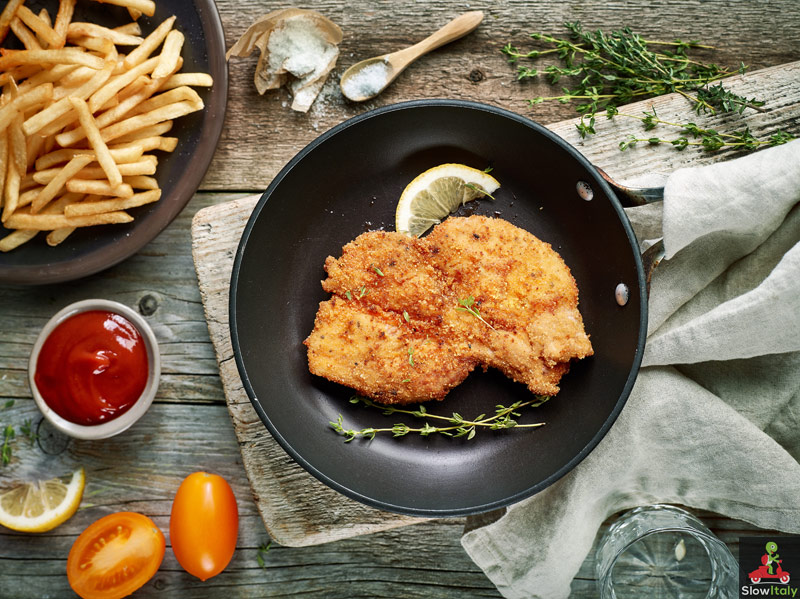
Cotoletta alla Milanese
Probably one of Milan’s most famous dishes, along with risotto alla milanese and ossobuco. However, its origin is still a matter of dispute. Very similar to the Viennese Schnitzel, it is traditionally prepared with a veal cutlet that is breaded and fried in butter. The butter or lemon juice is then poured over the cutlet before being served.
A popular legend has it that the first coteletta was served during a monastic lunch in 1148 during which the lombulos cum panitio were served.
Scaloppine di Vitello
Breaded veal scallops sauteed in olive oil. This dish can have hundreds of interpretations, with lemon, capers, marsala, etc. The most famous one being ‘alla Milanese‘.
Tagliata
Tagliata is the Italian name for sliced steak. thick piece of beef that is grilled, then carved.
Beef cuts in Italy are quite different from what is customary in the States. There are traditionally 19 different cuts versus 10 to 13 American or British beef cuts.
The meat is seasoned only with salt and olive oil, sometimes rosemary. The cuts of beef that are traditionally used for a tagliata are controfiletto (rib and shortloin), fesa (small part between the rump and round or lower, inner part of the round), noce (a round, tender part at the back of the bottom sirloin and the end of the flank), scamone (upper part of the rump or round)
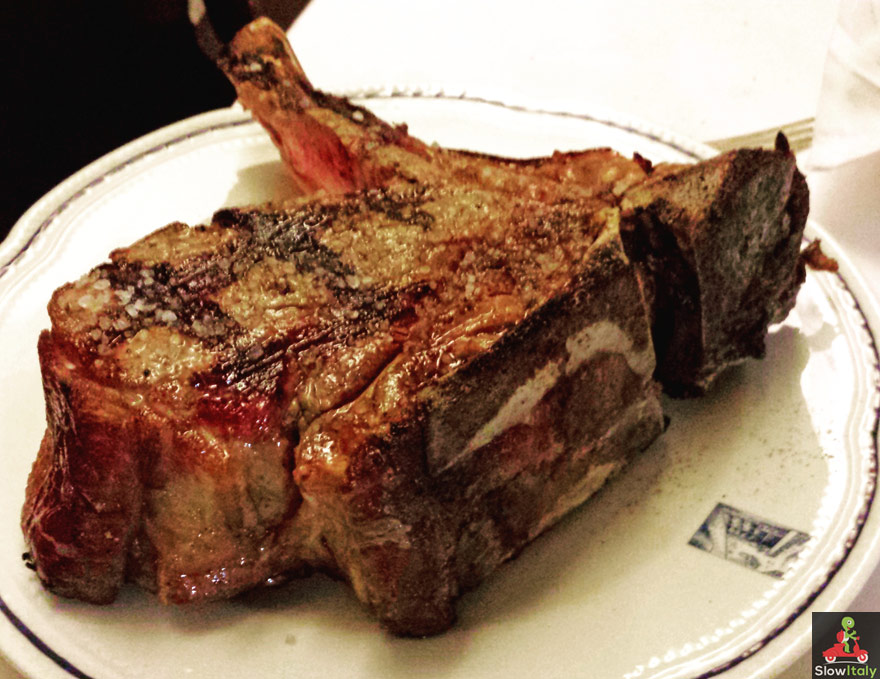
Bistecca Fiorentina
Bistecca fiorentina is a large T-bone steak served blood rare. It is at least 4 to 5 cm high and weighs at least 800g, grilled over wood or charcoal fire and seasoned with salt and often garnished with lemon wedges. The meat is sourced from beefs of the Chianina breed, but Maremmana, Marchigiana and Romagnola breeds are also tolerated if aged between 12 and 24 months.
Parmigiana
Parmigiana or parmigiana di melanzane is an oven-baked dish made of fried sliced aubergines layered with tomato sauce, basil, garlic and one or more cheeses pecorino, mozzarella, or caciocavallo. The dish’s origin is still being disputed, but the most probable hypothesis is that it is of Southern Italian origin, both Campania and Sicily.
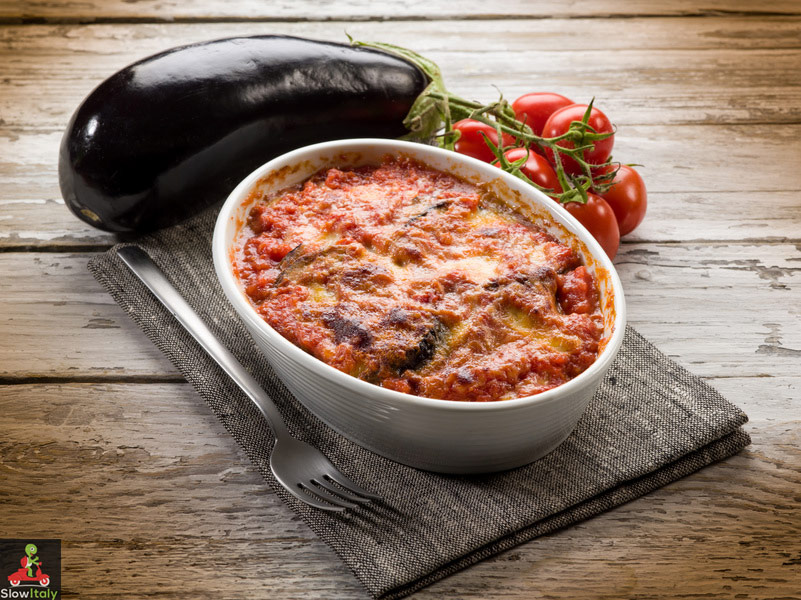
Some claim that the dish is of Emilian origin and that the proper name is melanzane alla parmigiana, after the town of Parma (prepared in the “Parma way”). However, a more plausible explanation is that the word parmigiana refers to a stratified type of dish, which was already commun in medieval Naples. It is not uncommon in the etymology of words that a term of local origin (possibly “parmiciana” ?) is later adapted to resemble a known word. Adding to the confusion is the fact that some recipes add grated parmesan cheese to the recipe.
What is sure is that the two earliest written references stem from two Neapolitans, the first one being mentioned in Il cuoco galante by Vincenzo Corrado and the second one in the Cucina teorica-pratica by Ippolito Cavalcanti, which suggests a recipe that is very similar to the present-day version of the parmigiana.
Truffles
With its magical scent and exquisite taste, the true White truffle or Alba Truffle (Tuber magnatum) is one of the most refined delicacies in the world. It is found almost exclusively in Italy.
A little less aromatic and flavorful than the white variety, the more affordable black truffle is used in some refined pasta dishes and as a key ingredient in local dishes.
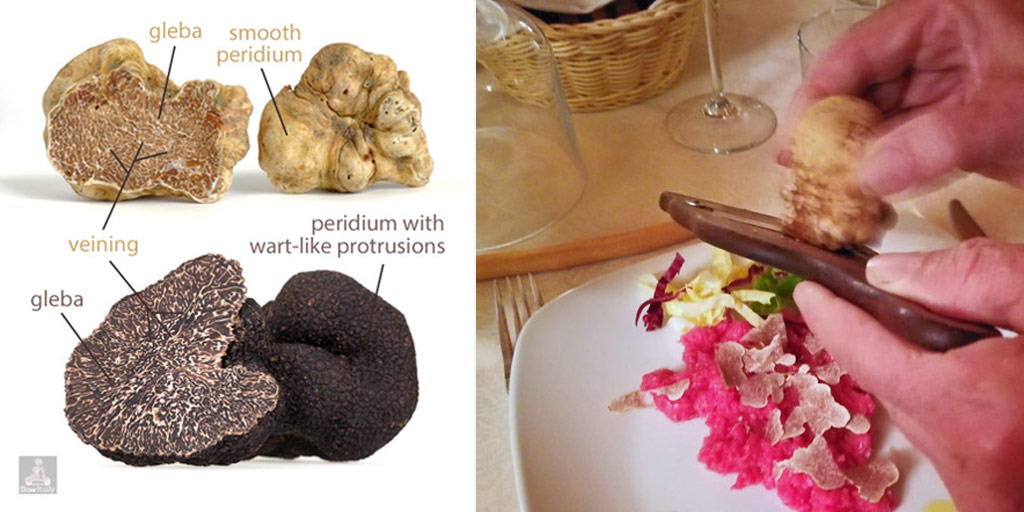
While the black truffle can withstand some cooking, the white truffle is too delicate and always served fresh.
There are 9 different truffle varieties available on the market in Italy. These truffle species all differ in their color, texture, aroma, taste and price. Read more: white truffles.
See als: Most expensive and luxurious pasta recipes >>
Fine Mushrooms
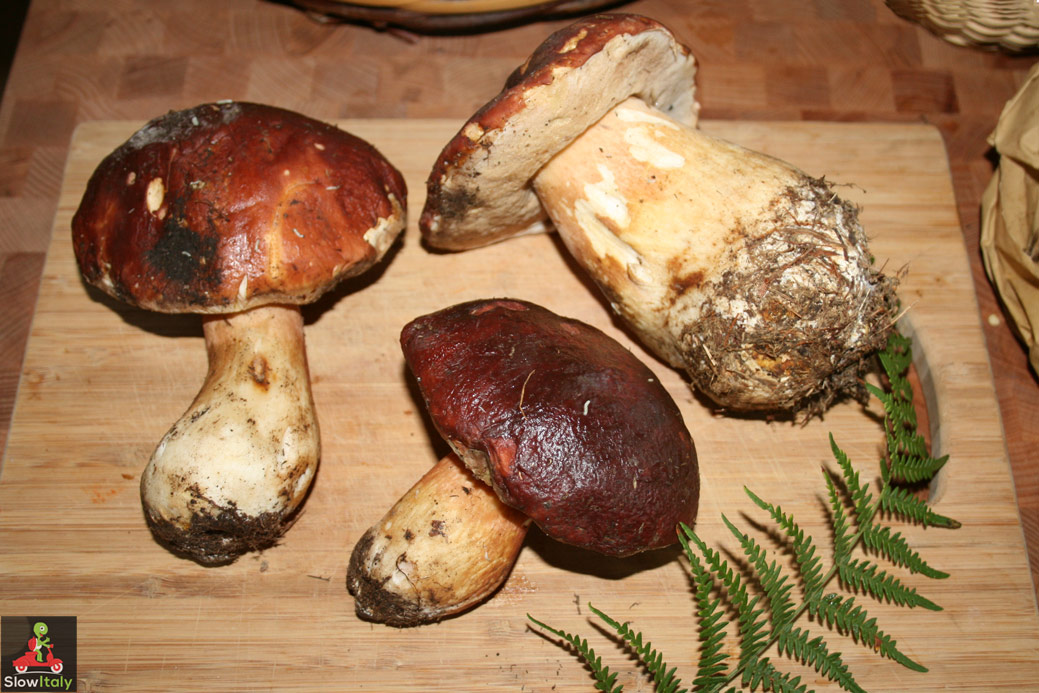
The most delicate and expensive mushrooms are Gallinaci, Porcini and Ovuli mushrooms. They are prepared sauteed in a pan with olive oil, some garlic and parsley and served as antipasto or with pasta.
Seafood
Given the proportion of coast line as compared to its overall size, Italy counts many seafood dishes, apart from fish, all types of crustaceans, molluscs and sea urchins. Along the coast and further southwards one will typically find a higher proportion of fish and seafood dishes.
For the rarest types of shellfish, see: 6 delicious types of Shellfish you will not usually find on a restaurant menu.
Seafood can be prepared as antipasto, such as in antipasto di mare misto or zuppe di cozze, as a primo with pasta or as a main dish. Below are a few flagship dishes.
Lobster
Maine lobster (known as astice in Italian), though used in delicate pasta and rice recipes, is not indigenous to Italy. The type of lobster found in the Mediterranean is known as aragosta. It is slightly larger than a Maine lobster and has no pincers. Uncooked it is also slightly lighter in color, greyish brown instead of dark brown or bleuish black.
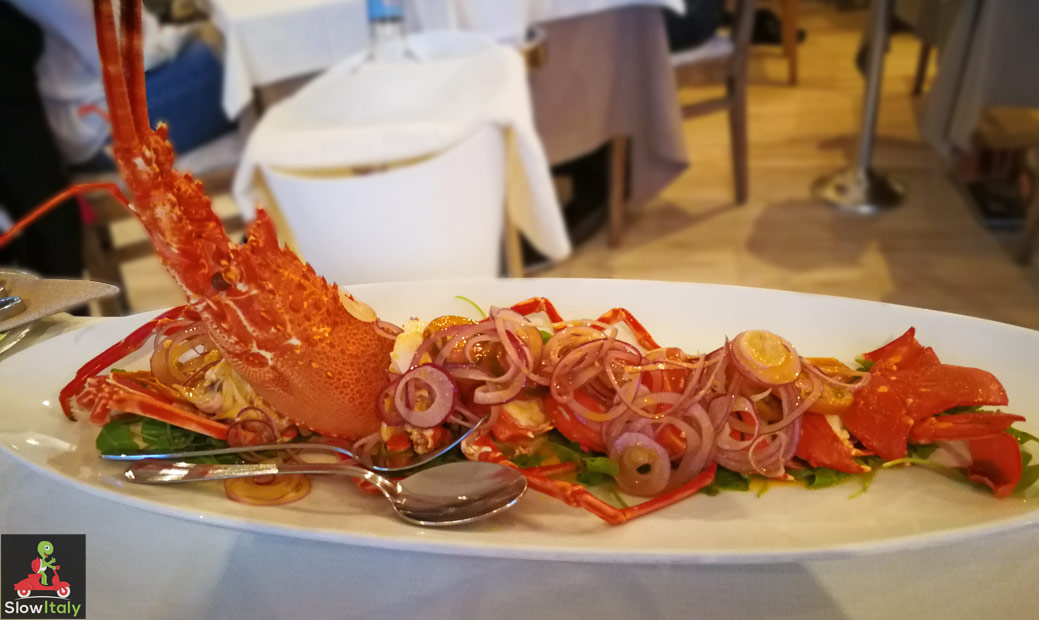
There are also a few peculiar and rare shellfish varieties that you will only find in (in specific areas of) Italy. See: 6 Delicious types of shellfish you will not usually find on a restaurant menu. Even if the latter ones are not so common, it is good to know that they are absolutely worth trying whener the opportunity arises.
Zuppa di Cozze
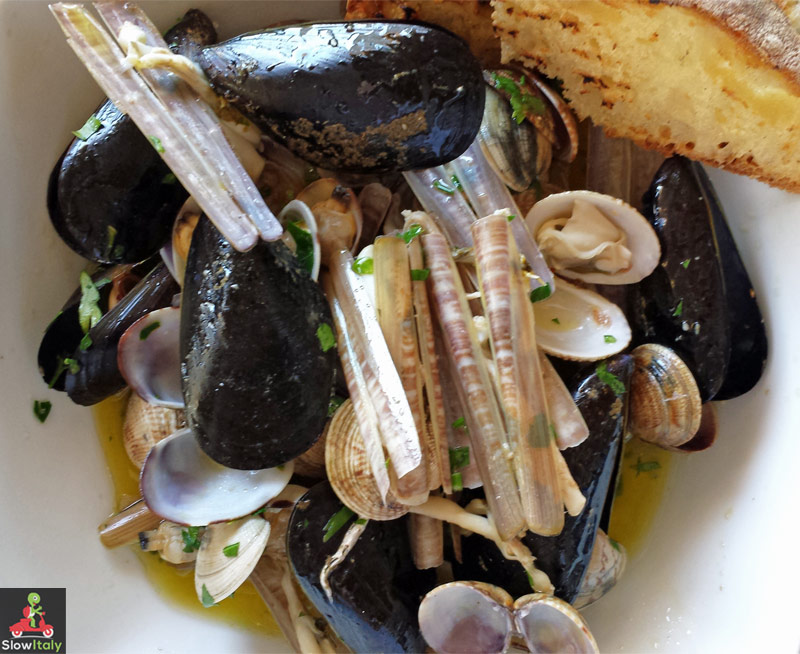
Unlike the name suggests not really a soup, but a classic way of cooking and serving mussels, in white with a tasty sauce of white wine, garlic and italian parsley. Similarly, you also have Zuppa di Vongole (clams) or a ‘misto Cozze e Vongole’.
Zuppa di Pesce (Italian Fish Soup)
A fish stew prepared with fresh and local ingredients.
Sea urchins
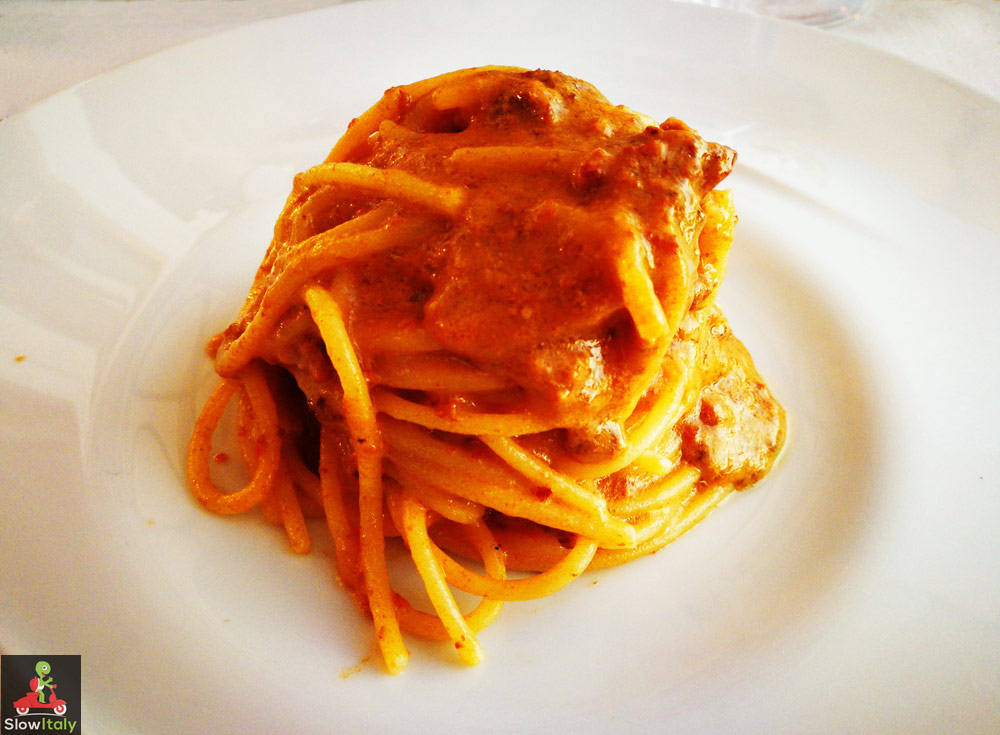
Sea urchins are spiny, globular animals, whose eggs (corals) are considered a culinary delicacy, used to prepare a delicious pasta dish. They are harvested in May and June, but can also be stored in the freezer for later consumption without losing their consistency or taste.
Bottarga
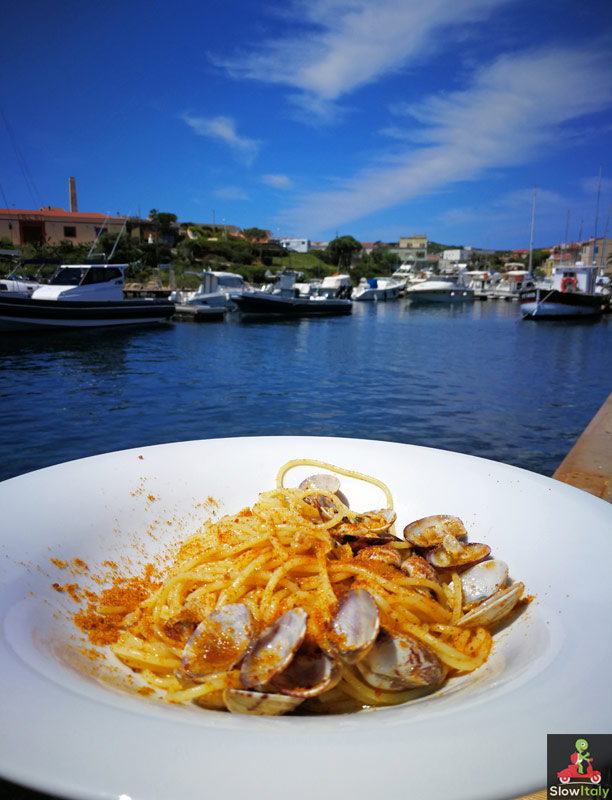
Bottarga (in English also known as botargo) is a delicacy of dried fish roe from grey mullet or tuna. The finest one, of grey mullet, is predominantly found in Sardegna, and also in the Orbetello, Tuscany. Tuna bottarga is a specialty of Sicily and Calabria.
It can be eaten sliced in thin shreds on a piece of bread after having been left to soften in olive oil for at least half an hour, or grated over omelets, rice, mozzarella cheese and mashed potatoes. However, it is best known in the classic Sardinian combination of Spaghetti alla Bottarga (always add the bottarga at the end on the dish, not in the pan).
It is usually sold grated or as whole and coated in beeswax for keeping.
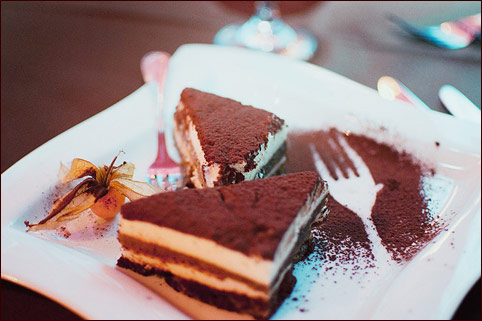
Tiramisù
Italy’s most famous dessert, made of mascarpone cheese, coffee-soaked ladyfinger biscuits, eggs, sugar and cacao powder. Literally, tirami su, means ‘pull me up’ in the sense of ‘cheer me up’, which given the concentration of comforting ingredients is a well-deserved name!
Gelato
Italian gelato is very different from the ice cream consumed abroad. Italian gelato is made without preservatives, as it is not usually intended to be stored for long. It is made of fresh, natural and seasonal products. This is especially true for the fruit-based gelatos, but also for many cream-based flavors.
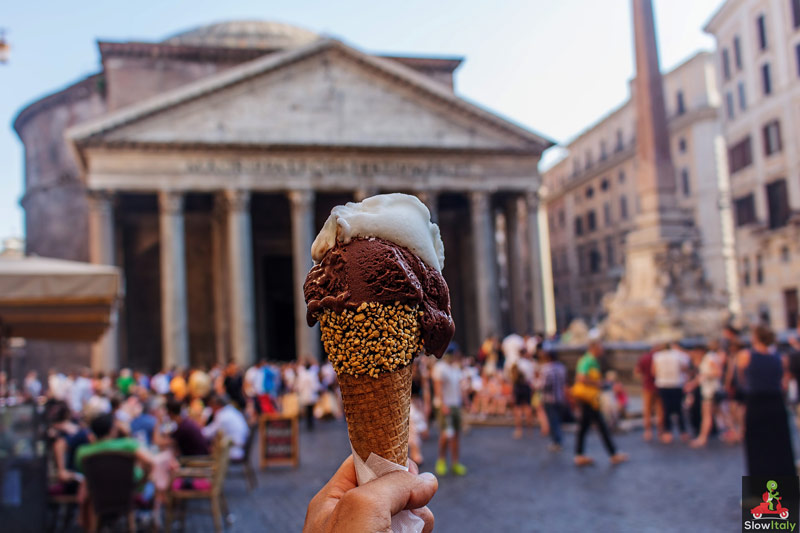
Traditional gelato is not served with an ice cream scoop or disher. Instead a typical gelato spatula is being used, which allows to ‘work’ the gelato before pressing it on the cone or into the cup (coppetta). That is because artisan gelato is generally served at a temperature of -15°C or +5°F whereas the serving temperature of regular ice cream is usually around -20°C or -4°F. Read more about true Italian gelato.
Chocolate and Cioccolatini
Italy has a long tradition associated with chocolate making. Turin used to be Europe’s first capital of chocolate. Two other centers of excellence include the Sicilian town of Modica, which still produces its chocolate following the original Aztec recipe, and the Chocolate Valley in Tuscany, between Pisa, Prato and Pistoia. Also renowned for their historic artisan chocolatiers are Napels and Perugia. Read more: Italian towns for chocolate lovers.
Panettone & Pandoro
A large leavened cake stuffed with candied orange and lemon zest, as well as raisins, which are added dry and not soaked. Hardly any Italian family would go without having Panettone on the table at Christmas. Recently, new variations appeared on the market such panettone with chocolate, with champagne cream, etc.
It is usually sold at Christmas and served as dessert or for breakfast. It is cut in vertical slices. Famous producers are Tre Marie and Bauli.
Pasterelle, pasticcini and mignon
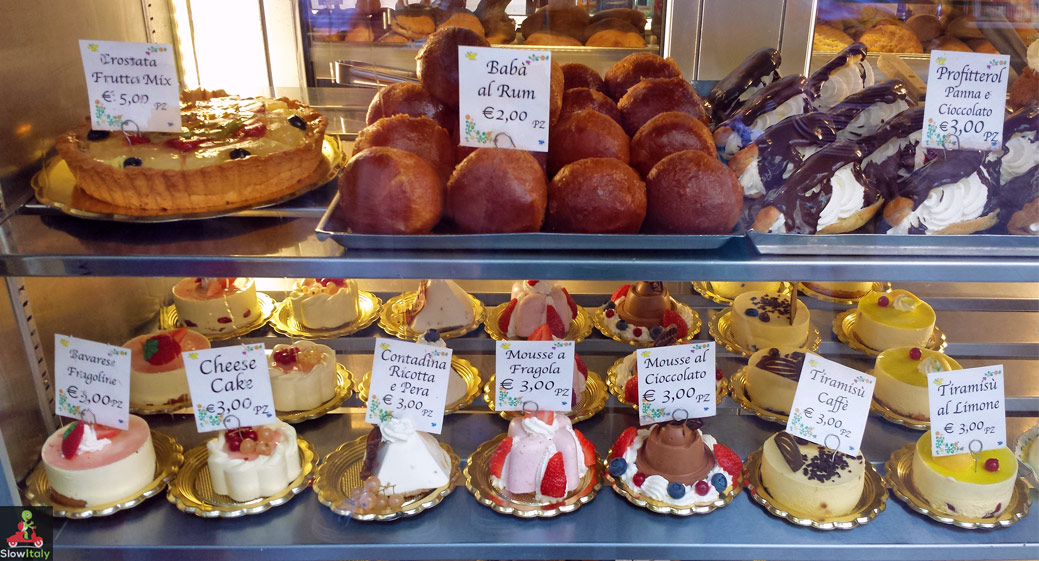
Italy counts a wide choice of delicious pasterelle (sfogliatelle, maritozzi, aragoste) and pasticini (pastries) that are consumed either for breakfast or as a mid-afternoon break (merenda or merendina). The smaller may are typically also served at the end of a (festive) meal and can be brought as a gift to your hosts when invited for a meal.
Herbs & Spices
As Italian cuisine relies on fresh, seasonal products cooked with a minimum of transformation, it does not rely on a large variety of spices.
The variety of spices used in Italian cooking is not as important as, for example, in French or Southeast and South Asian cuisine, but the spices and herbs included are almost always used fresh, which gives the dishes a delicate, yet exceptional flavor.
Common spices, condiments and herbs used in Italian cuisine include: basilico (basil) and lauro (bay leaves) leaves, prezzemolo (flat-leaf parsley), peperoncino (red pepper), aglio (garlic), origano (oregano), rosmarino (rosemary), zafferano (saffron), salvia (sage), timo (thyme).
Balsamic vinegar, olive oil, Parmesan cheese, or Pecorino, black olives and pine kernels are also used to flavor dishes (the latter one especially in some regional dishes), for example stew dishes alla cacchiatora.
Oilve Oil
Olive oil is not just used as a vector to distribute heat during the cooking process, but also forms an integral part of the recipe’s ingredients. It is therefore always choosen with the utmost care. Only the best quality extra-virgin olive oil is used in Italian cuisine. The olive oil used for cold prepartions such as marinades and salades, or savoured with bread, is of a different quality as the one used for cooking.
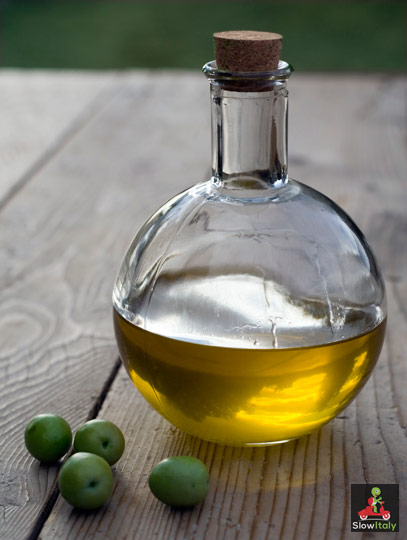
Extra-virgin oil comes from the first pressing of the olives and contains no more than 0.8% acidity. It is judged superior in taste and with more health-beneficial properties.
In Italy quality labels exist for olive oil in the same way as for quality wine. Olive oils grown in the specific regions are given the Denominazione di Origine Protetta (Denomination of Protected Origin) status.
“First cold press” means that no heat was used in the production process, which is important because heat alters the olive oil’s chemistry and qualities. A further distinction exists between monocultivar oils (where the oil is pressed in a different way according to the variety of olive) and blends (balanced and smooth). Traditionally a good blend stems from many varieties of olives from the same grove.
Photo credits: all photos © Slow Italy, except (from top to bottom), featured image © master1305; pasta © fcafotodigital/istockphoto; pizza © Alvaro Faraco/istockphoto; risotto @ befa/istockphoto; arancini © enrico scarsi; Porchetta © goghy73; saltimbocca © bernjuer/istockphoto; cotoletta © Magone/istockphoto; parmigiana © Marco Mayer; tiramisù by sasha fujin; Gelato at the Pantheon © Uğur Keskin; olive oil © amphotora;