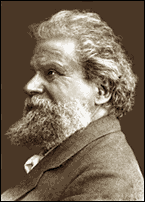
Carducci's later poetry was the full expression of his free thought and of modern ideas, inventions, and revolutions. It inspired his compatriots in the war for Italian independence, and enjoyed an immense popularity both at home and abroad. Carducci's collection of poems ends paradoxically with the consolidation of a fanatically patriotic and classicist academic style that will be continued by Pascoli and D'Annunzio and will be a pretext of the aesthetics of fascism.
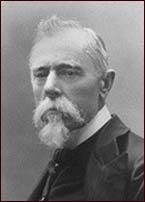
Giosuè Carducci - Nobel prize in Literature 1906 Reason: for his deep critical research, for the freshness of style, for the lyrical strength that characterizes most of his masterpieces.
Giosuè Carducci (1835-1907) was a poet, noted literary historian and an eminent orator. He was also an excellent translator of Goethe and Heine, which greatly influenced the development of his own poetry.
The cycle of his poetry begins in his young years with a strong reaction against the old academism of late Romanticism dominant in grand ducal Tuscany. The first two collections of his poetry were Rime (1857) (Rhymes) and Levia Gravia (1868) (Light and Heavy).
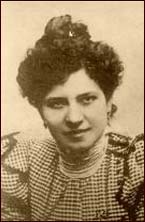
Grazia Deledda - Nobel prize in literature 1926 Reason: For her works, idealistically inspired that outline clearly and vividly the life of her island.
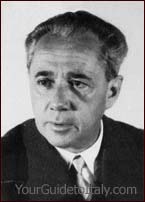
Salvatore Quasimodo - Nobel prize in literature 1959 Reason: because with his poetic lyricism he has portrayed the tragically human experiences of modern times
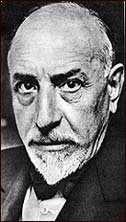
Luigi Pirandello - Nobel prize in literature 1934 Reason: For his honest and daring attempt to perpetuate the art of theatre to the utmost dramatic levels
Giulio Natta - Nobel prize in Physics 1963 Reason: For the researches and the discoveries made on stereo specific polymerization of propylene.
Nobel Prize in Economics
Franco Modigliani - Nobel prize in Physics 1985 Reason: for his important analysis on savings and financial markets
Giulio Natta
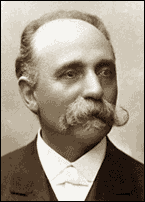
Camillo Golgi - Nobel prize in Medecine 1906 (won 1/2 of the prize together with Santiago Ramón y Cajal from Madrid University, Spain)
Reason: for the researches made on the structure of the nervous system
Camillo Golgi (1844- 1926) studied medicine at the University of Pavia and continued to work in Pavia at the Hospital of St. Matteo after graduating in 1865.
He directed the Department of General Pathology at St.Matteo Hospital where young doctors were trained, but never actually practised medicine himself.
Salvador E. Luria - Nobel prize in Medecine 1969 Reason: For the discoveries of the mechanism of replication of
the genetic structure of a virus
Renato Dulbecco - Nobel prize in Medecine 1975 Reason: For his discoveries on the interaction among carcinogenic viruses and the genetic code of the cell.
Nobel Prize in Physics
Guglielmo Marconi - Nobel prize in Physics 1909 Reason: For his researches and for his discovery on wireless telegraphy Read more>>
Enrico Fermi - Nobel prize in Physics 1938 Reason: For the discovery of artificial radioactivity produced from irradiation of neutrons Read more>>
Emilio Segrè - Nobel prize in Physics 1959 Reason: for the discovery of the antiproton.
Carlo Rubbia - Nobel prize in Physics 1984 Reason: For the important discovery of intermediate vectorial bosons.
Riccardo Giacconi - Nobel prize in Physics 2002 Reason: for the discoveries on neutrins, particles that are created during fusion process of the sun and other stars
Nobel Prize in Chemistry
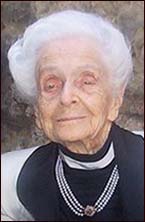
Rita Levi-Montalcini - Nobel prize in Medecine 1986 Reason: For the discovery of "growth factors" in the nervous system (together with colleague Stanley Cohen).
Mario R. Capecchi - Nobel prize in Medecine 2007 (won 1/3 of the prize, together with Sir Martin J. Evans (UK) and Oliver Smithies (US) Reason: for their discoveries of principles for introducing specific gene modifications in mice by the use of embryonic stem cells
YourGuideToItaly.com Your guide to discoveringItaly bit bybite
Rita Levi Montalcini
Eugenio Montale - Nobel prize in literature 1975 Reason: for his particular poetic form that has interpreted the human values of a life free of illusions
Dario Fò - Nobel prize in literature 1997 Reason: relevant figure of political theatre who, in the tradition of minstrels, has censured power and restored the dignity of the humble
Grazia Deledda
Luigi Pirandello
Nobel Prize in Peace
Ernesto Teodoro Moneta - 1907 Reason: For his commitment and the foundation of the "Lombard Union for peace and arbitration"