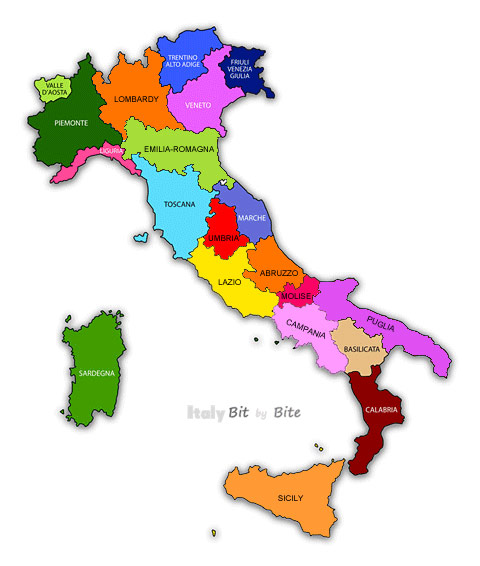
Not surprisingly, traveling through Italy is also like walking through a real-life course in history as nearly each of the italian regions is associated with a particular chapter in European history. Latium, for example, represents the Roman Empire, Veneto the Middle Ages, Umbria the Etruscan Era, Emilia-Romagna's town of Ravenna the Byzantine Empire, Sicily the Greek period, Florence the Renaissance and Piedmont the Modern Times, with its capital Turin, seat of the Fabbrica Italiana Automobili Torino (Fiat).
Italy is divided into different regions (20 in total), each with their own history, cultural and culinary traditions and sometimes even, their own independent language.
Within Italy each region is considered as different from the others as can be the Welsh from the Scots or the East Coast from the West Coast, but once abroad hardly any other people feel as united and stick as much together as the Italians.
11. Lombardy (Lombardia)
capital: Milan (Milano), regional language: Lombard
Travel highlights: Milan, Lake Como, Lago d'Iseo, Lake Maggiore
Other Sights: Bergamo, Brescia, Cremona, Certisa di Pavia, Monza, Parco Nazionale dello Stelvio