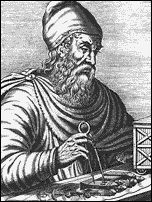
Unlike his inventions, the mathematical writings of Archimedes were little known in antiquity.
Amedeo Avogadro (1776-1856)
An Italian scientist famous for his contributions to molecular theory, such as concepts that came to be known as Avogadro's law, Avogadro's number and Avogadro's principle.
In an articles published in 1811, he clearly drew the distinction between molecules and atoms. He explained that what had been so far considered "atoms" of nitrogen and oxygen were in reality "molecules" containing two atoms each. The idea was in complete contradiction with the chemical philosophy of the early nineteenth century which considered that atoms combined in function of affinities based on electrical force. Therefore it was believed that only unlike atoms would be attracted together. The fact that two atoms of the same element (hydrogen) could combine to form a molecule of hydrogen was completely contrary to scientific knowledge of that time. For that reason Avogadro's work went neglected by the European scientific community for nearly fifty years, until another Italian scientist Stanislao Cannizaro showed the importance of Avogadro's work at the world's first international conference on Chemistry held in Karlsruhe, Germany in 1860. Very shortly after, Avogadro's work was recognized for its brilliant deduction, but in the mean time the main protagonist had died in 1854 he died, an unknown figure.
Avogadro suggested that at constant temperature and pressure equal volumes of all gases contain the same number of molecules, which became known as Avogadro's Principle. According to Avogadro's Principle, the molar volumes of all gases should be the same. The number of molecules in one mole is now called Avogadro's number. The number was never actually determined by Avogadro himself, as he had no knowledge of moles, or of the number of molecules they contained. The presently accepted value of Avogadro's number is 6.0221367x10²³.
Giovanni Battista Beccaria (or Giambattista Beccaria, 1716-1781)
Italian physicist and geodeticist noted for his discovery of the light sensitivity of silver chloride, an important development in photography, and for his precise experimentation and calculations which proved Benjamin Franklin's theory of single-fluid, positive and negative electricity.
.
.
.
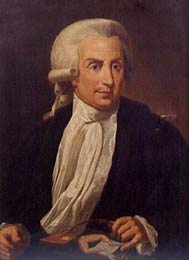
Luigi Galvani (1737-1798)
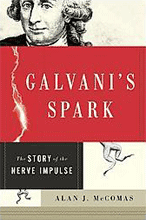
Luigi Galvani was an Italian physician and physicist from Bologna, who had also studied medicine and had practised as a doctor. The recognition by Galvani that muscles and nerves have an electrical component triggered the field of neurophysiology and in turn has produced some of the greatest discoveries in neuroscience. (see book on the right). Galvani's name also survives in the Galvanic cell, the galvanometer, galvanic corrosion, and galvanization.
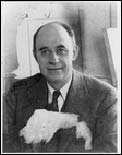
Fermi was born in Rome on 29th September, 1901 and became American citizen in 1944. At the end of the war (1946) he accepted a professorship at the Institute for Nuclear Studies of the University of Chicago, a position which he held until his untimely death in 1954. He received the Nobel Prize in Physics in 1938 for his work on artificial (induced) radioactivity.
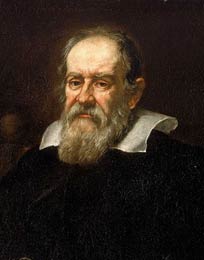
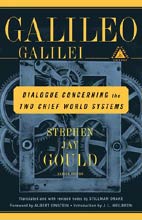
Galileo Galilei (1564-1642)
Enrico Fermi (1901 - 1954)
Enrico Fermi is considered one of the most important scientists of the 20th century for his work on the development of the first nuclear reactor, and for his contributions to the development of quantum theory, nuclear and particle physics, and statistical mechanics. The particles subject to Pauli's exclusion principle are called "fermions" after his name and the statistical laws governing these particles are called "Fermi statistics".
Galileo Galilei was an Italian physicist, mathematician, astronomer, and philosopher whose achievements include improvements to the telescope and consequent astronomical observations and support for Copernicanism. He has been referred to as the "father of modern physics" and "the Father of Modern Science".